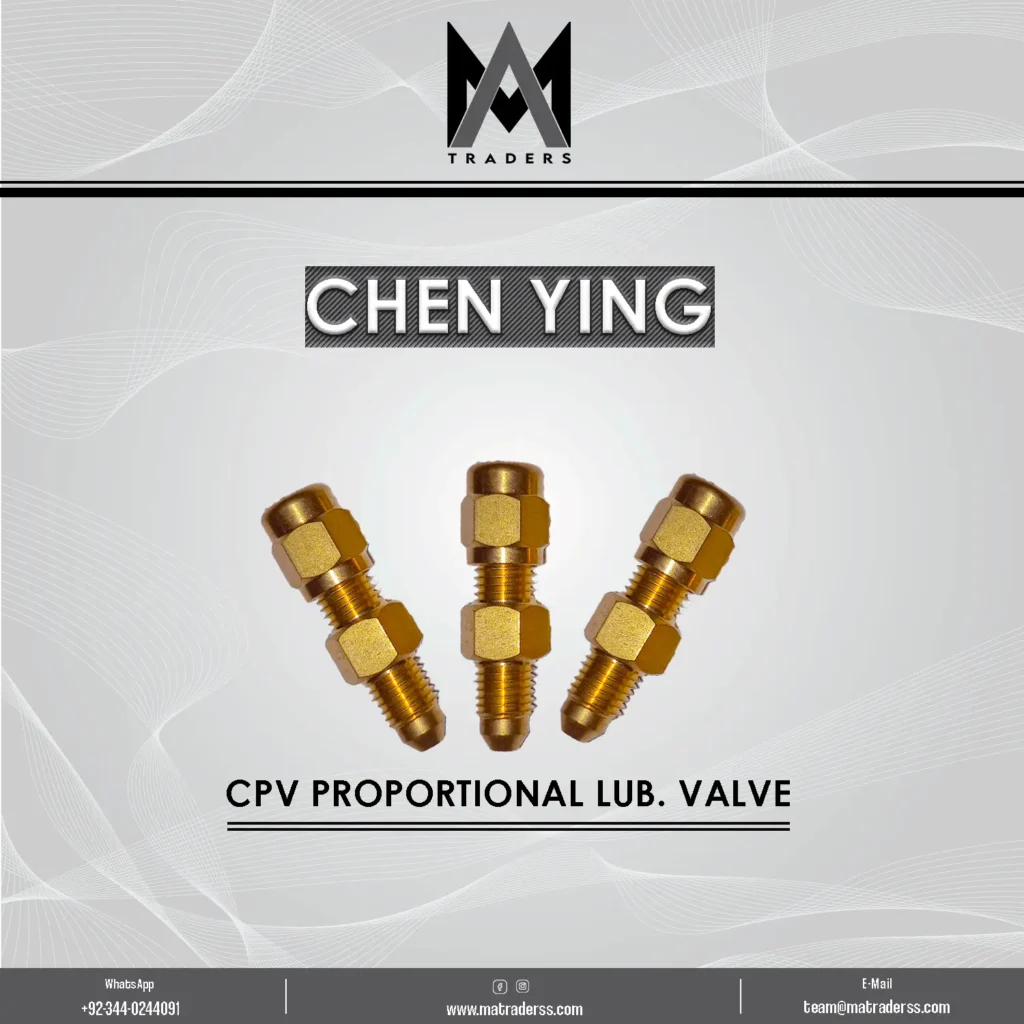
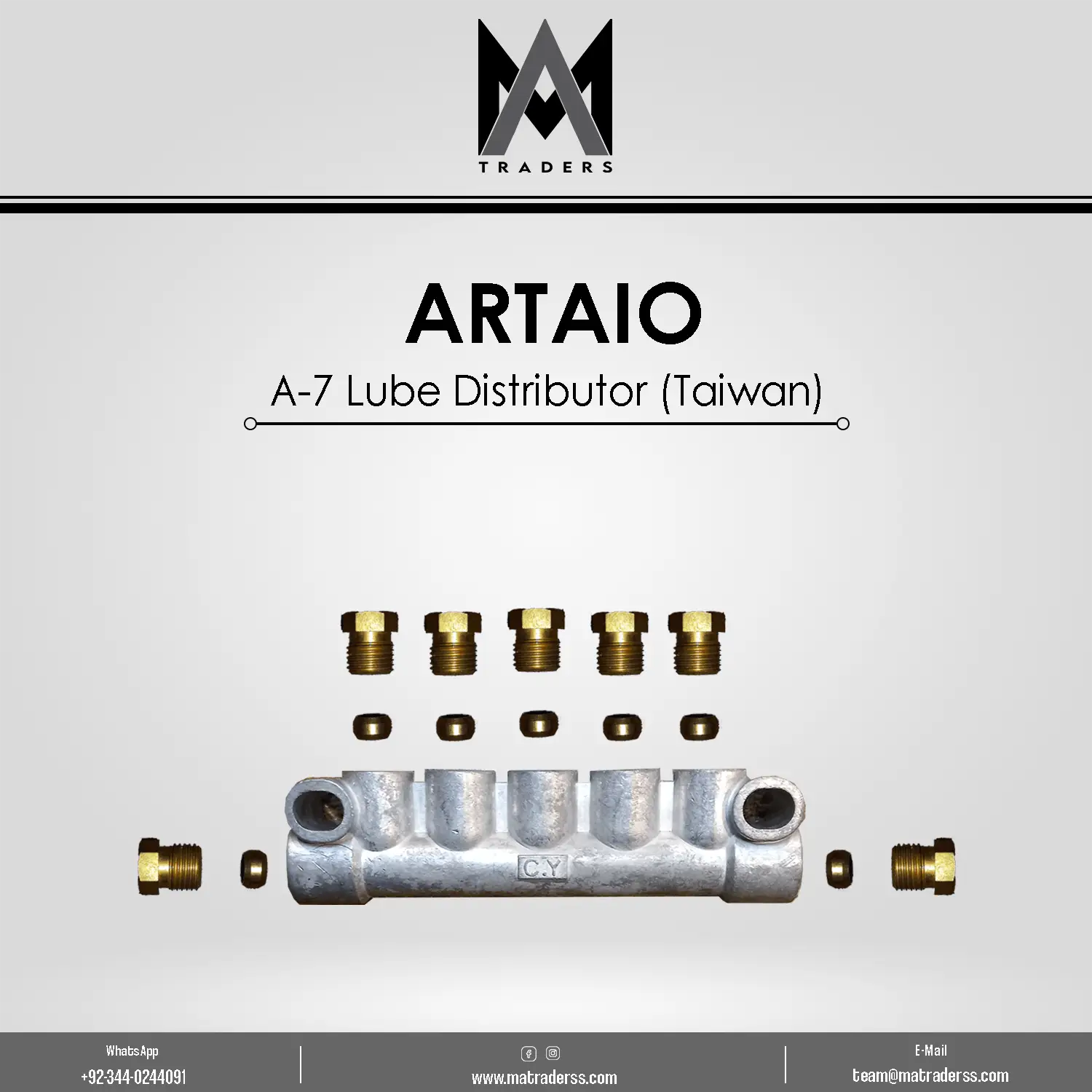
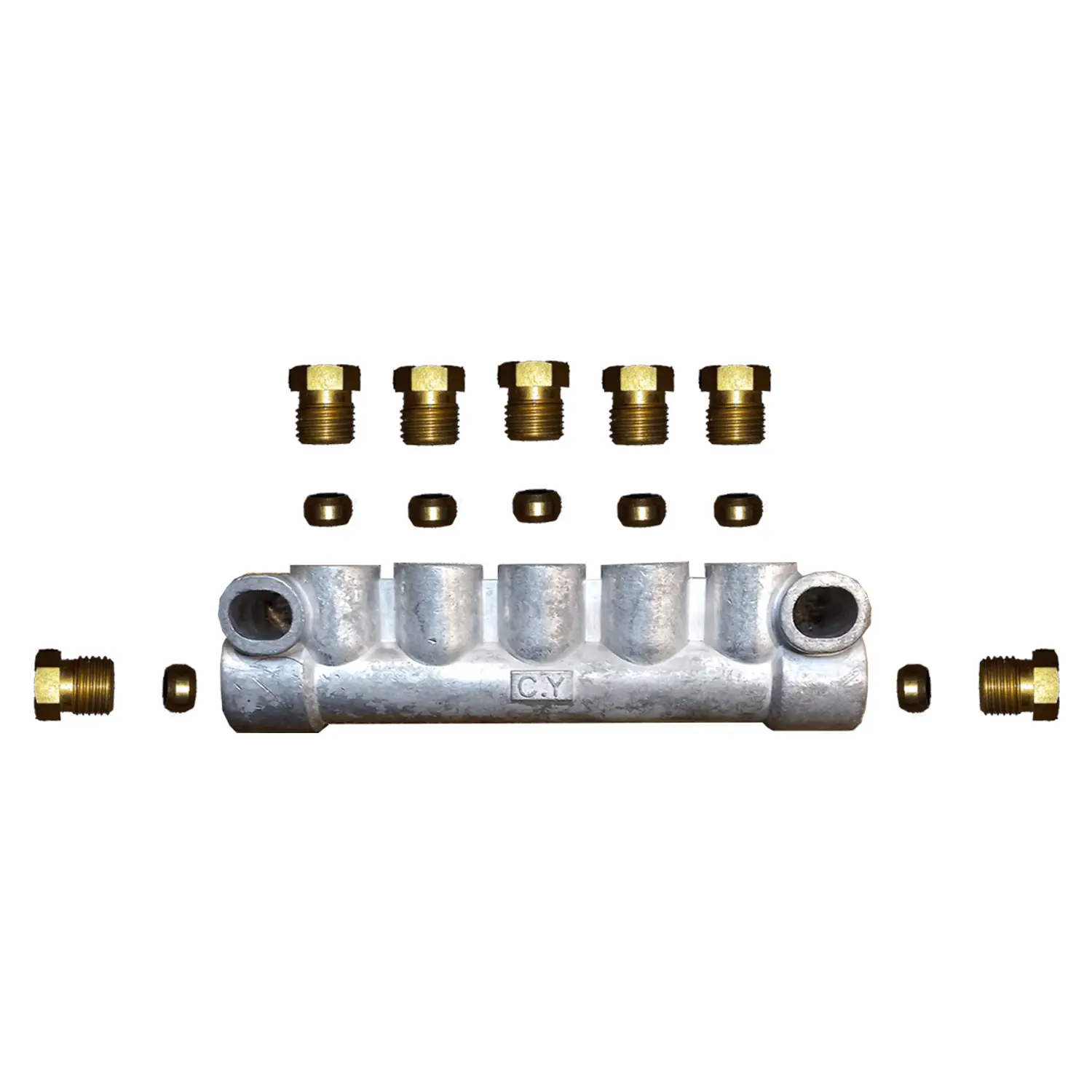
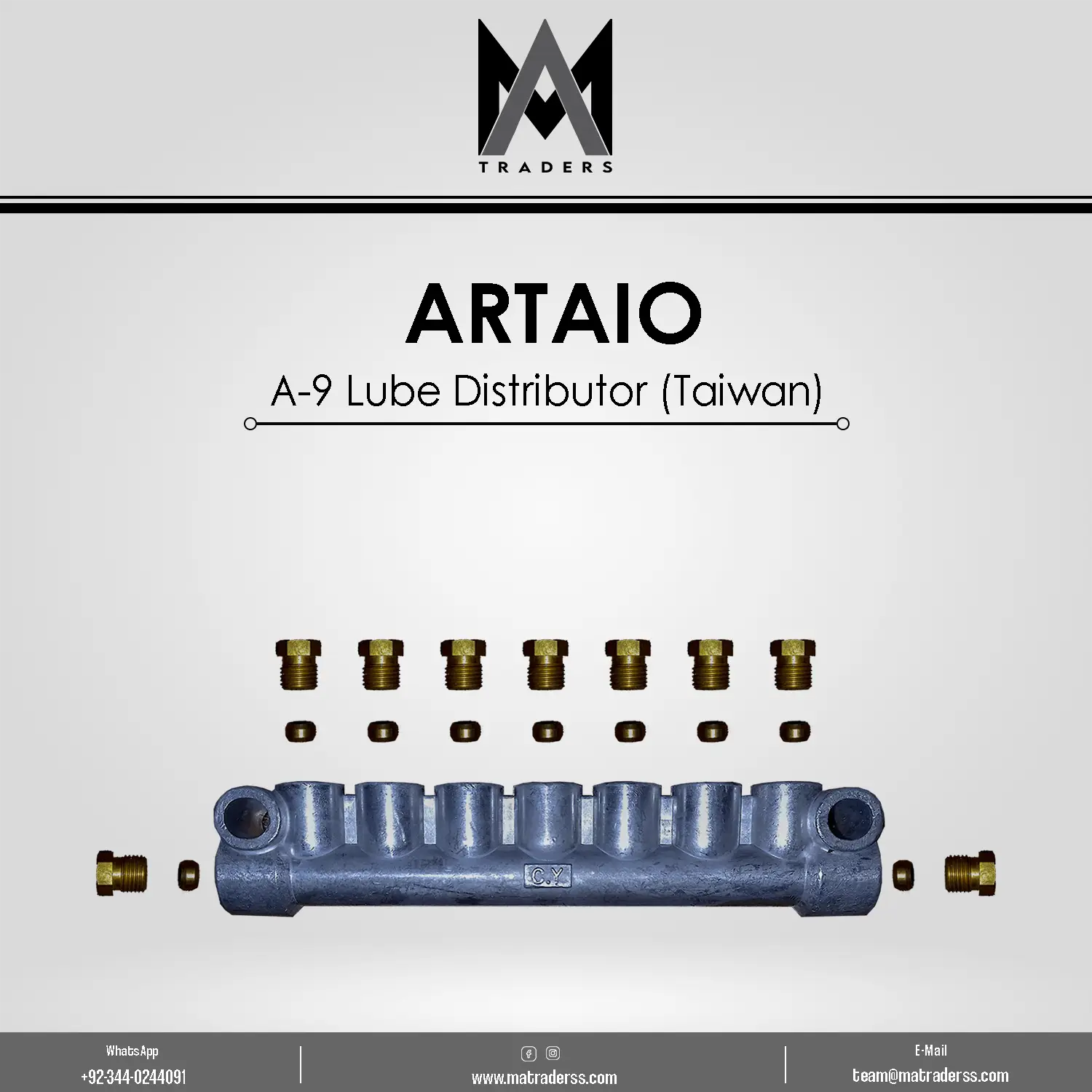
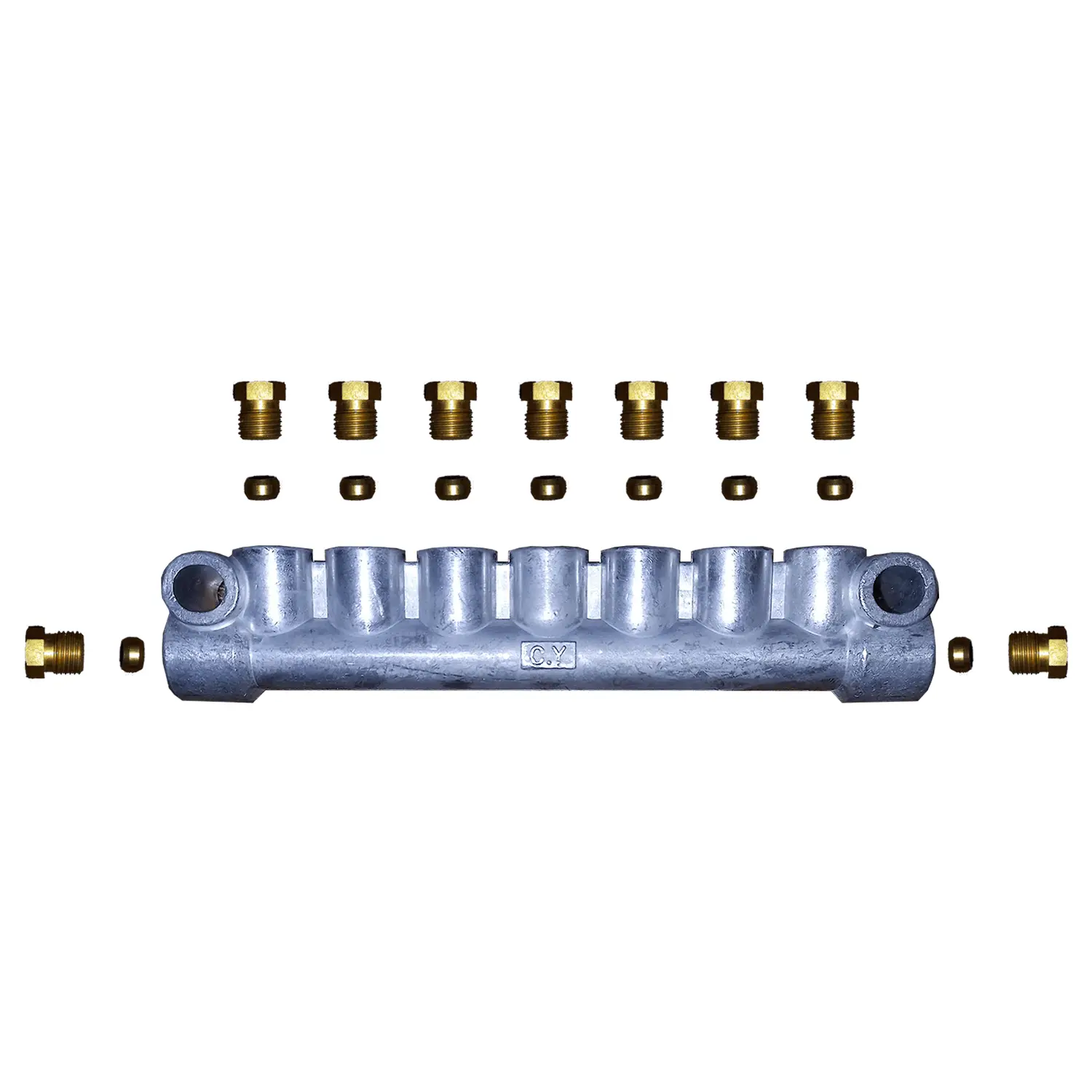
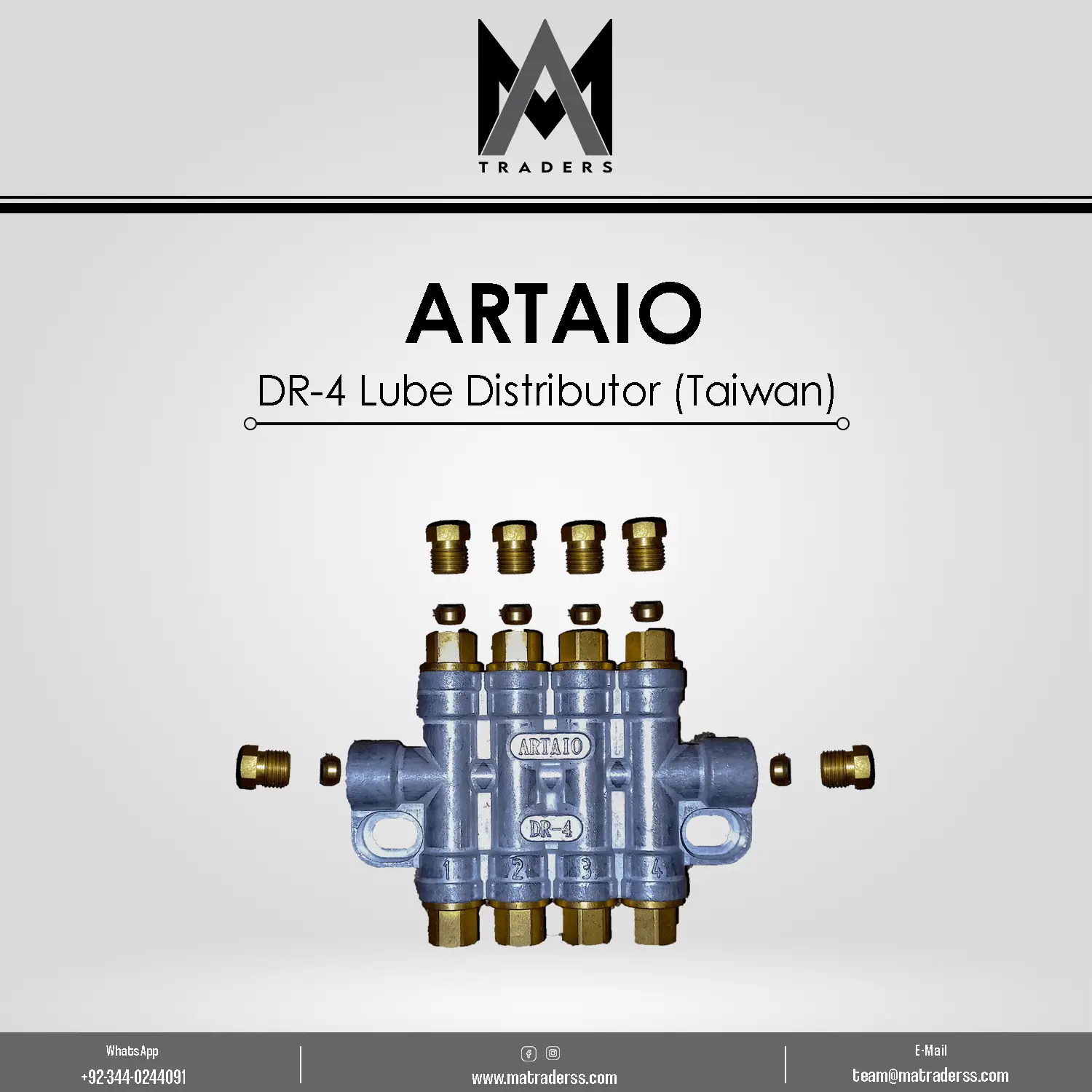
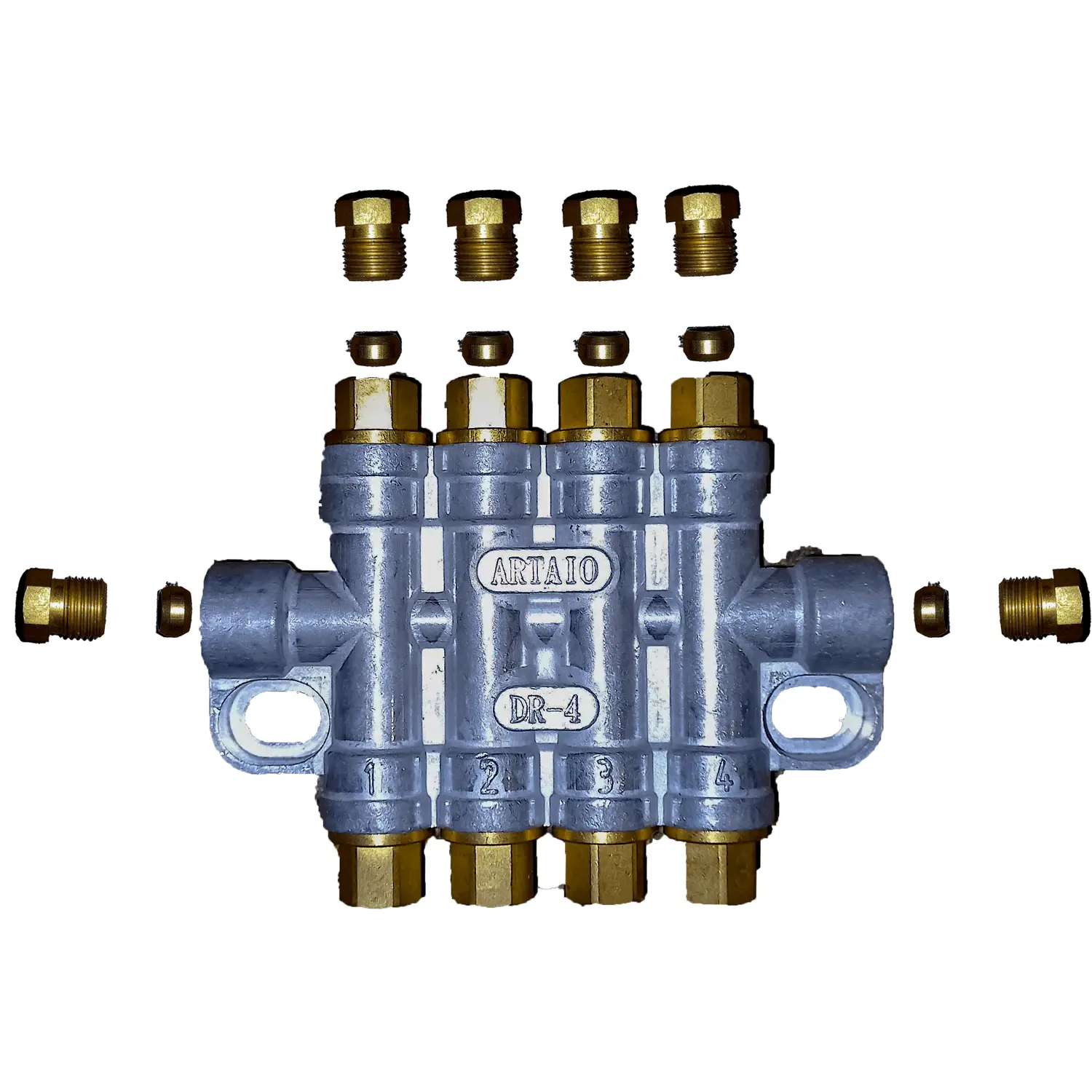
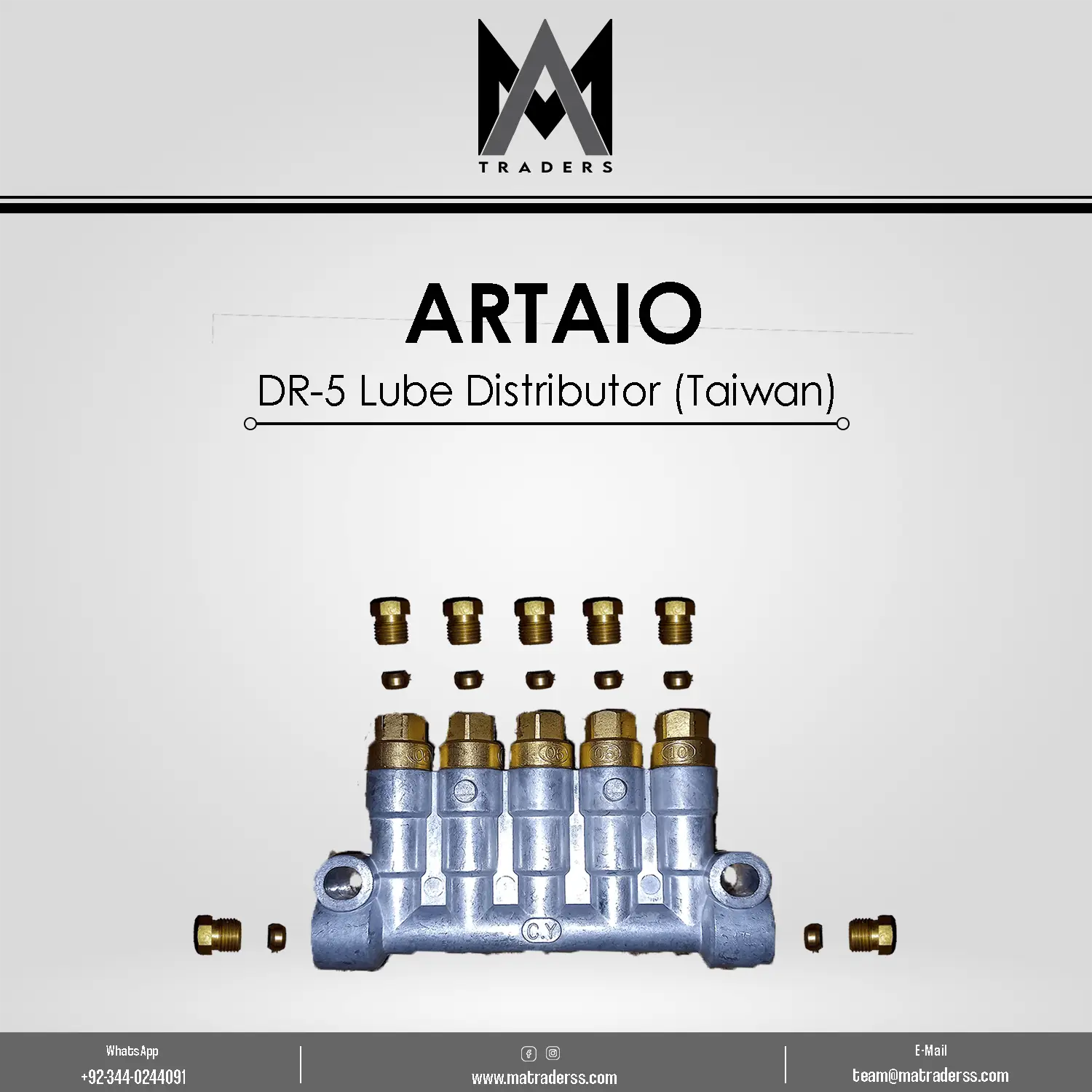
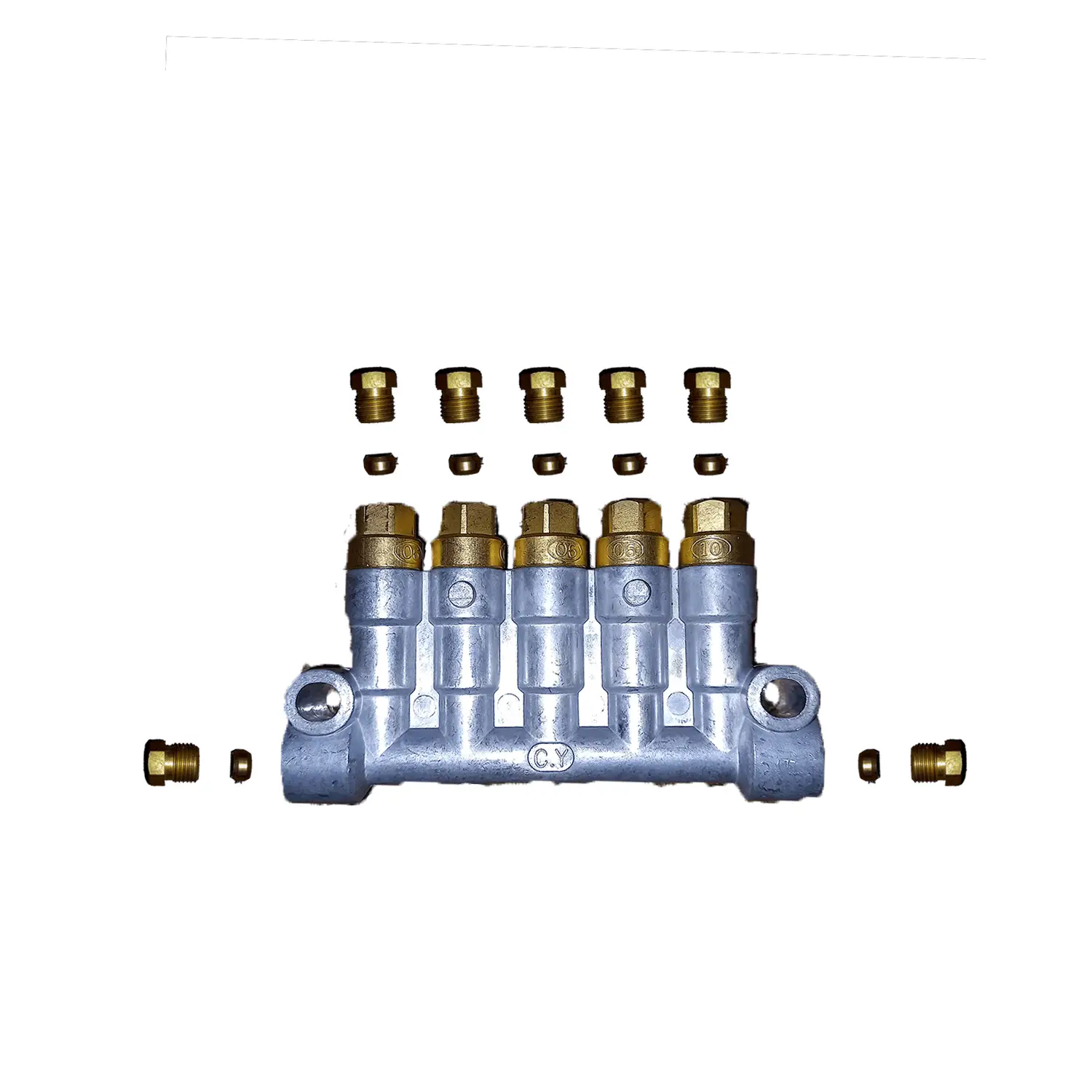
Artaio Lubrication Pressure Distributors
Centralized Lubrication Components and Pressure Distributors
Artaio
New
In Stock. Bulk orders and custom configurations available.
Artaio lubrication pressure distributors are components used in centralized lubrication systems to regulate and distribute oil to multiple lubrication points within industrial machinery.
These distributors ensure that the correct amount of lubricant reaches each machine component such as bearings, ball screws, linear guides, and sliding surfaces.
In automated lubrication systems, pressure distributors divide the incoming oil supply from a lubrication pump into multiple controlled output channels. This ensures consistent lubrication across all connected machine parts.
Artaio pressure distributors are commonly used in CNC machines, industrial automation equipment, hydraulic systems, and heavy machinery where reliable lubrication is essential for reducing friction and mechanical wear.
| Specification | Details |
|---|---|
| Product Type | Lubrication Pressure Distributor |
| Application | Centralized Lubrication Systems |
| Material | Industrial-grade metal alloy |
| Pressure Capability | Designed for high-pressure lubrication systems |
| Port Configuration | Multiple output ports depending on model |
| Flow Regulation | Fixed or adjustable flow options |
| Connection Types | BSP, NPT, push-fit, or flanged connections |
| Condition | New |
Pressure distributors divide lubrication flow evenly between multiple lubrication points to maintain proper oil supply throughout the system.
Industrial-grade construction allows the distributor to operate under high-pressure lubrication systems commonly used in CNC machinery.
Each outlet port regulates lubricant flow to prevent over-lubrication or insufficient oil delivery.
Distributors can be integrated into centralized lubrication networks with varying port configurations and flow requirements.
The metal body construction resists vibration, temperature variation, and contamination commonly found in industrial environments.
In centralized lubrication systems, a lubrication pump delivers pressurized oil to the distributor block.
During operation:
The lubrication pump sends oil into the distributor inlet.
The distributor divides the oil flow across multiple outlet ports.
Each port supplies lubricant to a specific machine component.
Controlled lubrication reduces friction and mechanical wear.
This process ensures continuous lubrication for critical machine components during operation.
Lubrication distributors supply oil to spindles, ball screws, guideways, and linear motion components.
Distributors provide lubrication to cylinders, moving joints, and mechanical components operating under heavy loads.
Automated production lines require consistent lubrication to maintain reliability of moving parts.
Robotic joints and actuators rely on controlled lubrication to minimize wear and maintain smooth motion.
Lubrication systems in large industrial machines require pressure distributors to deliver oil to multiple lubrication points.
Artaio lubrication pressure distributors are available in multiple configurations depending on lubrication system requirements.
Common options include:
2-port distributors
4-port distributors
6-port distributors
8-port distributors
custom multi-line distributor systems
Two primary flow control types are available:
fixed flow distribution
adjustable flow distribution
Depending on the installation requirements, distributors may include:
BSP threaded connections
NPT threaded connections
push-fit connectors
flanged port connections
A lubrication pressure distributor divides oil flow from a lubrication pump and delivers it evenly to multiple lubrication points in a machine.
Yes. They are commonly used in centralized lubrication systems for CNC machines to lubricate spindles, guideways, and ball screws.
Yes. Distributors are available with different numbers of output ports depending on the lubrication network design.
Pressure distributors are used in centralized lubrication systems including progressive lubrication systems and dual-line lubrication systems.
Using lubrication pressure distributors provides several operational advantages:
consistent lubrication across machine components
reduced mechanical wear and friction
improved machine reliability and uptime
longer equipment service life
These benefits help maintain efficient operation in industrial manufacturing environments.
Useful Links
Subscribe Now
Don’t miss our future updates! Get Subscribed Today!
© 2024. MA Traders. All Rights Reserved.