
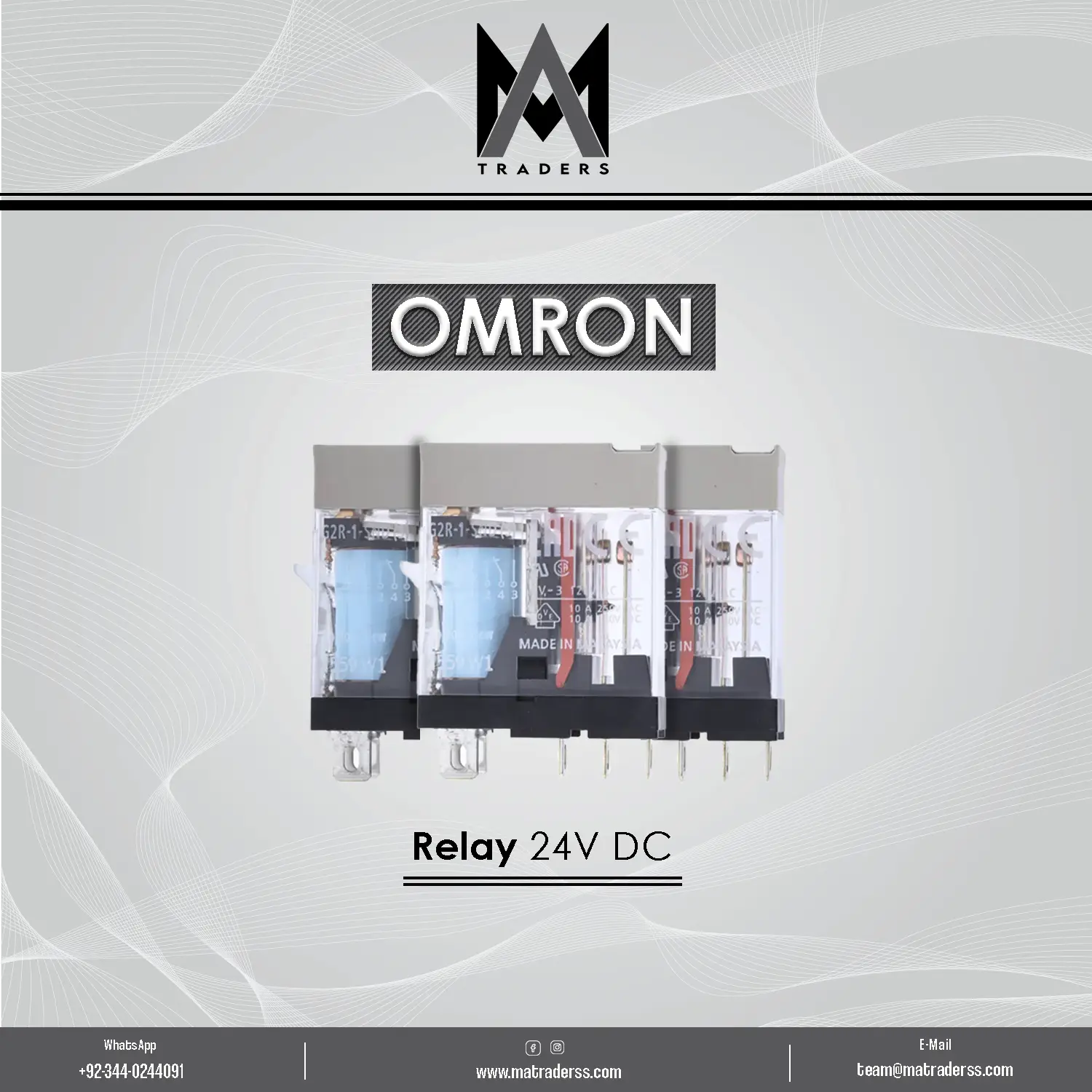
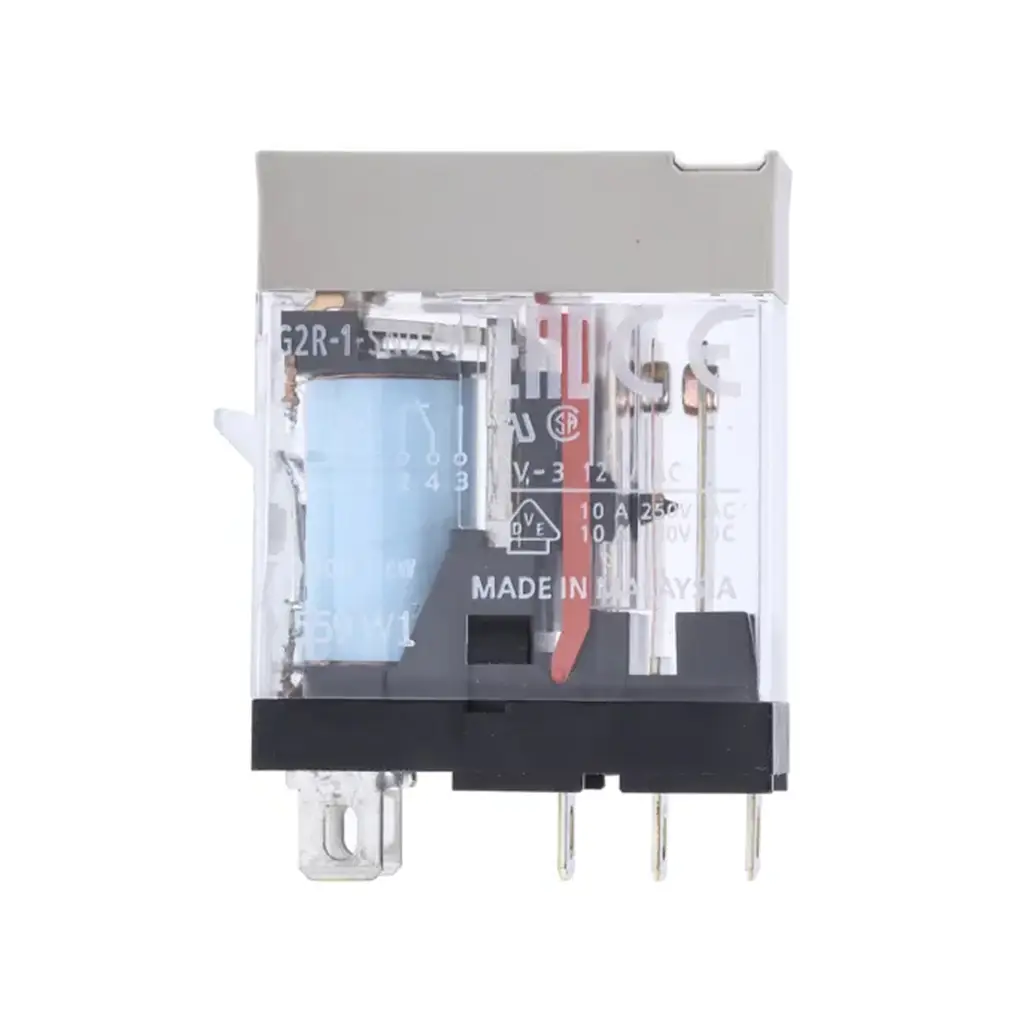
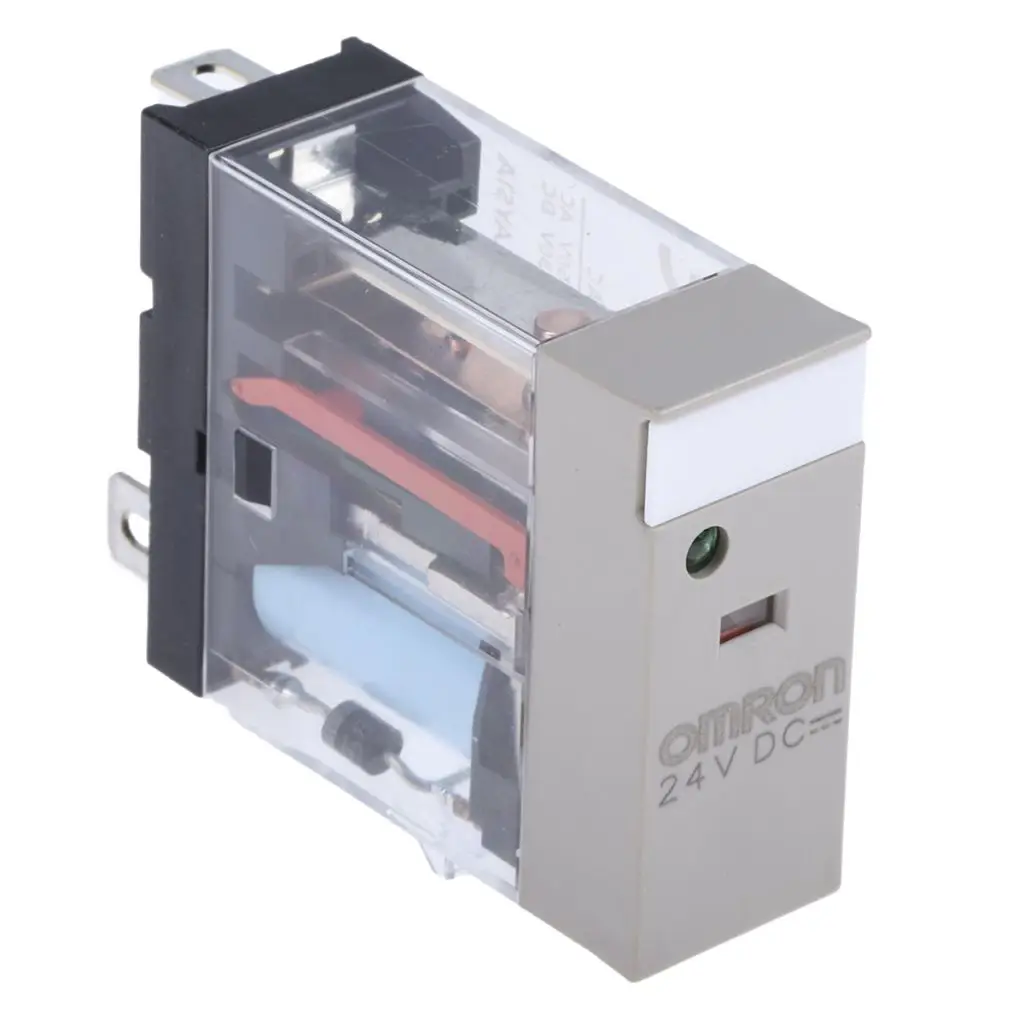
Industrial Power Relay
Omron
24V DC
Plug-In Socket Mount
SPDT or DPDT depending on model
New Industrial Grade
In stock and available for same-day shipping.
The Omron 24V DC plug-in power relay is an electromechanical switching device used in industrial control systems to open or close electrical circuits using a low-voltage control signal.
In automation and electrical control panels, relays allow a low-power signal from a PLC or controller to safely control higher-power electrical loads such as motors, solenoids, lighting systems, and contactors.
This Omron relay operates with a 24V DC coil voltage, making it compatible with many PLC control circuits and industrial automation systems. The plug-in design allows the relay to be easily installed or replaced using a compatible socket without rewiring the control panel.
| Specification | Details |
|---|---|
| Brand | Omron |
| Coil Voltage | 24V DC |
| Contact Configuration | SPDT / DPDT |
| Contact Rating | Up to 10A at 250VAC or 30VDC |
| Mounting Type | Plug-In Socket |
| Operating Temperature | −40°C to +70°C |
| Insulation Resistance | ≥100 MΩ at 500V DC |
| Mechanical Life | Up to 10 million operations |
| Compliance | RoHS and CE certified |
The relay coil operates using a 24-volt DC signal, which is commonly used in PLC outputs and industrial control circuits.
The relay contacts switch electrical loads independently from the control circuit, allowing a low-power control signal to operate higher-power devices.
The plug-in configuration allows the relay to be installed into a compatible socket mounted on a DIN rail or control panel. This design simplifies maintenance and replacement.
The relay contacts can switch loads up to approximately 10 amperes, making it suitable for controlling motors, solenoids, and industrial equipment.
Some relay models include an integrated LED indicator that visually confirms when the coil is energized.
Power relays operate using an electromagnetic switching mechanism.
The operating process typically follows these steps:
A control signal energizes the relay coil.
The energized coil generates a magnetic field.
The magnetic field moves the internal switching contact.
The contact opens or closes the electrical circuit connected to the load.
This allows control systems to safely switch high-power circuits using low-voltage signals.
Power relays are commonly installed in control panels to switch motors, pumps, and other electrical equipment.
Programmable logic controllers use relays to control field devices such as solenoids, alarms, and indicator lights.
Heating, ventilation, and air conditioning systems use relays to manage compressors, fans, and electrical control circuits.
Relays are often used to activate contactors or control auxiliary circuits in motor control panels.
Single Pole Double Throw relays contain one switching contact that can connect to two different circuits.
Double Pole Double Throw relays contain two independent switching contacts, allowing simultaneous control of two circuits.
Plug-in relays are designed to fit compatible sockets such as Omron PYF series relay sockets or equivalent industrial sockets.
For DC coil relays, correct polarity must be maintained when connecting the coil terminals.
Relay sockets are typically mounted on DIN rails or inside control panels for organized wiring.
Plug-in relays can be replaced quickly without removing wiring connections.
Relays isolate the control circuit from the load circuit, improving safety and reliability.
Multiple contact configurations allow relays to control different circuits within the same control system.
Omron relays are designed for long mechanical life and stable switching performance.
A power relay allows a low-voltage control signal from a PLC or controller to switch higher-power electrical loads such as motors, lights, or actuators.
Yes. Plug-in relays require a compatible socket such as Omron PYF series or other equivalent relay sockets.
Yes. The relay contacts can switch AC or DC loads within the rated electrical limits.
The coil operates on 24 volts DC, which is commonly used in industrial automation control systems.
Useful Links
Subscribe Now
Don’t miss our future updates! Get Subscribed Today!
© 2024. MA Traders. All Rights Reserved.